Jesus answered: ‘Will you lay down your life for me?’ - John 13:38

Support the Holy Father and pray with him!

"Young people in particular, I appeal to you: bear witness to your faith through the digital world!"

-Pope Benedict XVI

Pray for Pope Benedict's prayer intentions for this month. Find out more here.

Saturday, October 11, 2008

Why do we worship God?

This article (From JimmyAkin.org) is very much in line with something Nick told us some weeks ago. Why do we go for Mass? To receive Jesus? To receive His blessings? That shouldn't be the primary reason. We should move away from the me-centred attitude that is so prevalent around us. We go to Mass to worship God because that's what He deserves - because He's God. "It's is right to give Him thanks and praise" because of who He is and who we are, not because what we can get from Him and what He does for us. Our worship of God is a matter of justice (which has been defined as according a person what they actually deserve or are entitled to)

Youare_here

(Courtesy NASA.gov)

Last week in the combox discussion related to SDG's post, I wrote the following in response to an unbeliever who held that the praise and worship of God - especially in heaven for all eternity - strikes even most Christians as a bore and a drudgery, but they do it anyway because it's what God commands;

I have always been an artist. I have always understood that the world is a work of art, that it means something, and if it means something, then there must be someone to mean it.

(I know I'm paraphrasing Chesterton here and there)

The worship of God - due praise to the artist - is not only something I don't find AT ALL to be a dreary duty, but is something that can hardly be helped. It wants to leap out on its own, like a laugh or the "Oooohs and Aaahhhs" you hear at a fireworks show. They won't be able to shut me up in heaven.

I believe I did get the point across that the praise and worship of God is a very natural response, and this statement is alright as far as it goes, but it doesn't go far enough and could leave the false impression that we worship God mainly for what he does, rather than who he is.

God does deserve endless praise just for his work, his artfulness in creating the universe, but that is only the beginning of the story. The universe is as achingly beautiful and subtle and powerful and fascinating as it is because it reflects in many ways the character - the attributes - of the artist who made it. If the world is an artwork and does have meaning as I maintained above, then it all points back to the one who made it and what he is like. Not that a person would be able to really understand everything about God from nature alone (the pagans demonstrate that), but as St. Paul said in Romans 1:20, "For since the creation of the world God's invisible qualities—his eternal power and divine nature—have been clearly seen, being understood from what has been made, so that men are without excuse.".

As we pray in the Gloria, "We praise you for your glory.". God's glory is this revelation of himself, this radiant presence that comes to us through all of his creation. His glory consists in the very fact that the Triune God, infinitely perfect and complete, does not keep himself to himself. He continually shares his divine life with all creation, holding every atom in existence by his will from moment to moment. God shares with us the attributes of existence and free will in a completely unnecessary and ongoing act of love.

We praise God for who he is, and we only know who he is because he has revealed it to us in this radiant penumbra of glory called Creation. We often think of Creation as a noun, like it's only a thing. Creation is also a verb, the ongoing act of God.

Friday, October 10, 2008

What's good for the goose...

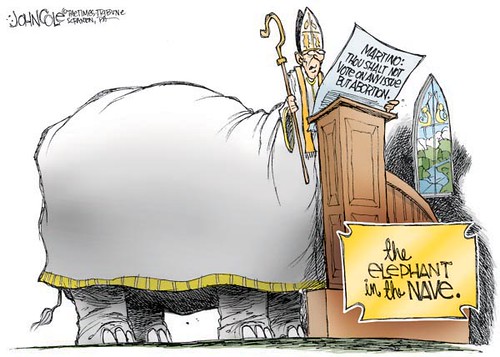
One of my pet peeves is the double standard in treating different religions. This is one of the many examples of them (source: American Papist). 


This was published after Bishop Martino of Scranton, PA asked his priests to read his pastoral letter for Respect Life Sunday instead of their Sunday homilys.

Tell me. If this were a leader of another religion, will it be accepted quietly? Will it even have the 'honor' of being printed? How is it that the smallest infringement on other faiths rouses so much debate and recrimination, but this doesn't? Why do people toe the line so carefully when talking about other faiths, but treat the Catholic faith as a free-for-all paint-ball course?

         Sometimes, it is just so difficult to turn the other cheek.

Thursday, October 9, 2008

Viva il Papa!

Photo via Fr Z

Benedict XVI, Bishop of Rome, Vicar of Jesus Christ, Successor of the Prince of the Apostles, Supreme Pontiff of the Universal Church, Primate of Italy, Archbishop and Metropolitan of the Province of Rome, Sovereign of the State of Vatican City, Servant of the Servants of God

Rosary Group?

At this point, Our Lady appeared to him, accompanied by three angels, and she said:
"Dear Dominic, do you know which weapon the Blessed Trinity wants to use to reform the world?"

"Oh my Lady," answered Saint Dominic, "you know far better than I o because next to your Son Jesus Christ you have always been the chief instrument of our salvation."

Then our Lady replied:
"I want you to know that in this kind of warfare, the battering ram has always been the Angelic Psalter which is the foundation stone of the New Testament. Therefore if you want to reach these hardened souls and won them over to God, preach my psalter."

So he arose, comforted and burning with zeal for the conversion of the people in that district he made straight for the Cathedral. At once, unseen angels rang the bells to gather the people together and Saint Dominic began to preach...So fervently and compellingly did he explain the importance and value of the Holy Rosary that almost all the people of Toulouse embraced it and renounced their false beliefs. In a very short time, a great improvement was seen in the town people began leading Christian lives and gave up their former bad habits...

Inspired by the Holy Ghost, instructed by the Blessed Virgin as well as by his own experience, Saint Dominic preached the Holy Rosary for the rest of his life. He preached it by his example as well as by his sermons, in the cities and in country places, to people of high station and low, before scholars and the uneducated, to Catholics and to heretics

- St Louis de Montfort, The Secret of the Rosary

Ave Maria

Ah...I told you to be patient with me. I'm about to bombard you again with angelic voices. haha. Here are the two beautiful versions of Ave Maria from Libera:


The Leaven in the Community - a creative minority

"Believing Christians should look upon themselves as such a creative minority and help Europe espouse once again the best of its heritage, thereby being at the service of humankind at large." --Joseph Ratzinger

Important, however, as may be the work in hand, the Legion does not regard it as the ultimate or even as the chief object of its members' apostolate. Such work may employ two, three, or many hours of the legionary's week, whereas the Legion looks beyond this to every hour of that week as radiant from the apostolic fire which has been kindled at its hearth. The system that imparts this quality of fire to souls has put abroad a mighty force. The apostolic spirit enters in only as master, dominates every thought, word, and action; and in its external manifestations is not confined to set times and places. The most diffident and otherwise least equipped person becomes invested with a peculiar capacity to influence others, so that whatever the surroundings, and even without the pursuing of a conscious apostolate, sin and indifference will end by bowing to a power greater than themselves. Universal experience teaches this. Therefore, with the satisfaction with which a general contemplates important posts adequately held, does the Legion think of each home, shop, factory, school, office, and every other place devoted to purposes of work or recreation, in which a true legionary may be set by circumstances. Even where scandal and irreligion are at their worst, entrenched so to speak, the presence of this other Tower of David will bar the way to further advance and menace the evil. The corruption will never be acquiesced in; efforts at remedy will be essayed; it will be a subject of sorrow, of prayer; will be contended against determinedly, unremittingly, and probably successfully in the end.

Thus the Legion begins by bringing its members together to persevere with one mind in prayer with their Queen. Then it sends them into the sinful and sorrowful places, there to do a good work, and by catching fire in the doing to do a greater. Finally it looks out over the highways and byways of the everyday life as the object of a still more glorious mission. Knowing what has been done by limited numbers, reflecting that the potential material for its ranks is almost beyond number, believing that its system, if vigorously utilised by the Church, affords a strangely efficacious way of purifying a sinful world, the Legion yearns exceedingly for the multiplication of its members, that it may be legion in number as in name.

Between those working actively, those giving auxiliary service and those being worked for, the whole population can be embraced, and raised from the level of neglect or routine to that of enthusiastic membership of the Church. Consider what this can mean to village or town; no longer merely in the Church, but a driving force in it, sending directly or through the Communion of Saints its impulses to the ends of the earth, and into the dark places thereof. What an ideal - a whole population organised for God! And yet this is no mere ideal. It is the most practical and possible thing in the world to-day - if eyes are but uplifted and arms unfolded.

"Yes, the laity are a 'chosen race, a holy priesthood', also called to be 'the salt of the earth' and 'the light of the world'. It is their specific vocation and mission to express the Gospel in their lives and thereby to insert the Gospel as a leaven into the reality of the world in which they live and work. The great forces which shape the world - politics, the mass media, science, technology, culture, education, industry and work - are precisely the areas where lay people are especially competent to exercise their mission. If these forces are guided by people who are true disciples of Christ, and who are, at the same time, fully competent in the relevant secular knowledge and skill, then indeed will the world be transformed from within by Christ's redeeming power." (Pope John Paul II's address in Limerick, Ireland, October 1979)

- Handbook of the Legion of Mary, Chapter 12, point 2

Wednesday, October 8, 2008

Abide with me

         Please humor me. I just wanted to share this video of one of my favorite songs, sung by my  favorite boy choir, Libera.


Such angelic voices. They have a lot of beautiful songs. You can go look them up on YouTube. Sanctus, Agnus Dei, Far Away, Going Home, Do Not Stand at My Grave and Weep, Ave Maria (two beautiful versions) and lots more.haha. You should really check them out.

The Holy Rosary - Allocutio - 8 Oct 2008

Emergence of the Rosary

The meditation of the Rosary has always been a universal belief, manifested in turning confidently to her as “all-powerful in prayer”, “hope of the world” and “empress of the angels.” Because the faithful realized their need for her help as the channel of grace, they created a multitude of popular and liturgical devotions.

Poetic souls never tired of invoking her, inventing names and titles to honor her, intoning song to her that abounded in tenderness and simplicity. Many of these verses were learned by heart; ordinary faithful recited them in the intimacy of their homes and on long journeys on foot. Before the 12th century, Church Councils began to recommend praying the Hail Mary. From St Bernard, we inherited his Memorare.

At the height of the middle ages, Alphonse the Wise composed Songs to Holy Mary, because he wanted to “write verse in honor of the Rose of roses and Flower of flowers.” Gonzalo de Berceo celebrated the Miracles of our Lady – the mercies of the Mother of God for sinners who called on her. There are but a few manifestations of a burgeoning and universal movement to honor the Virign.

Among these various devotions, the most outstanding and durable is undoubtedly the Holy Rosary. In the 13th Century England, a Cistercian abbot, Etienne de Sallai, wrote some meditations on the 15 joys of our Lady: the birth of the Virgin, her life, the Annunciation, the Conception, the Visitation, the Birth of Jesus, the visit of the Magi, the presentation in the temple, the loss of the Child in the temple, miracles accompanying the preaching of her Son, the Cross, the Resurrection, the Ascension, Pentecost, the Assumption and Glorification of Mary. Each one of these 15 meditations ended with a Hail Mary. Without yet being the rosary in its present-day form, this devotion was certainly an antecedent.

But it was St Dominic, also in the 13th century, who most contributed to the development and spread of the Rosary. “Venerable brethren, none of you is unaware of how many displeasures and bitterness were caused the holy Church of God, at the end of the 12th centur, by the Albigensian heretics, who, born of the sect of the last Manicheans, filled the south of France and other countries of the Latin world with their pernicious errors and, bringing to all parts the terror of their weapons, threatened to spread their dominion to all parts with extermination and death. Against such terrible enemies, as you know, God in his mercy raised up the remarkable father and founder of the order of the Dominicans, a truly holy man. This man, great for the integrity of his doctrine, for the example of his virtues, and for his apostolic works, with a strong spirit took on the war against the enemies of the Catholic Church, not with the force of arms, but with the most purified faith in the devotion of the Holy Rosary, who was the first to propagate it, and who personally through his sons brought it to the 4 corners of the world. Thus the fact made it manifest. For thanks to this way of praying, accepted, regulated and put into practice by St Dominic, piety, faith and concord began to be re-established, and the projects and artifices of the heretics were destroyed.

Near the end of the 15th century, Alain de La Roche gave the devotion of the Rosary a structure similar to what we have today: either five or fifteen mysteries are prayed, each one made up of 10 Hail Marys. For its part, the Church added to the words of the Hail Mary the petition for a good death, taken from Luke 1:28-42: “pray for us sinners now and at the hour of our death. Amen.”

The faithful came gradually to understand that contemplation of the mysteries is a primary concern, and they were divided into joyful, sorrowful and glorious. Thus, following the weekly cycle, the faithful meditate on the central facts of the lives of Jesus and Mary. More recently the litany which has an origin lost in the early centuries of the Church, was added to the Rosary.

Mary’s Meditation

In His divine plan of redemption, God destined a creature, Mary, to a singular mission, to be the Mother of God. That role of Mother brought with it many prerogatives: immaculate, virgin, co-redemptrix, mediatrix. Thus God intimately associated the loftiest of the creatures to His divine plan – a truth always recognized and proclaimed by the Church. Mary is described as “a celestial channel from which descend the streams of all divine graces.” (Benedict XIV) She is the “dispenser of all graces.” (Pius VII) “Absolutely nothing of that great treasure won by Christ… is given us except through Mary”. The magisterium of the Church has frequently referred to Mary’s role as mediatrix.

Mary has such a role “because our Lord wanted it to be this way”. At the Cross, seeing his mother and the disciple he loved standing near her, Jesus said to his mother: “Woman, this is your son”. Then to John the disciple he said: “This is your mother”. From that moment John made a place for her in his home.

John the disciple whom Jesus loved, brought Mary into his home, into his life. We also see these words of the Gospel as an invitation to all Christians to bring Mary into our lives. Mary certainly wants us to invoke herm to approach her confidently, to appeal to her as our mother, asking her, ‘to show yourself to be our mother’.

Once we become aware of Mary’s role in our redemption, we come to realize the importance of dealing with her, of loving her.

Do you want to love our Lady? Well, get to know her. How? By praying the Rosary well.

We often hear praying the Rosary to be monotonous and boring. However, those in love also often say the same things to each other. Yet we are not told to simply recite Hail Marys. Rather we are told to contemplate on the mysteries.

The essence of the Rosary consists in meditating the mysteries. In doing so, we are prompted to consider the plans of God and to stir up our heart to love His will. We should meditate on the lives of Jesus and Mary, from the joy of the annunciation, passing through the sorrow of our Lord’s death, to the glory of the coronation of the Virgin. Here we have a synthesis of the Gospel which discloses to us God’s love for men. Therefore “it is impossible for a Christian who applies himself with faith to praying these prayers and to meditating on these most high mysteries not to end up being deeply moved as he considers the designs of God carried out in the Most Holy Virgin for the salvation of all peoples. Once he is convinced of the truth of these things, the Christian should deliver himself confidently into her protecting arms, repeating the words of St Bernard “Remember Most Gracious Virgin Mary, that never was it known, that anyone who fled to your protection, implored your help or sought your intercession was left unaided...”

In the light of the richness of this devotion to Mary, one can see more easily the importance of this practice and the emptiness of the term “anachronistic devotion”. If one were to follow the same logic, he should conclude that Christ’s life just doesn’t fit into the contemporary scheme of things.

Fatima and Lourdes

The fact of Fatima and Lourdes emphasize still more the reasons for this devotion to Mary. The Virgin sought out a French girl and some Portuguese peasants to teach them how to pray the Rosary.

The apparitions of Fatima are also a testimony. When Our Lady appeared to 3 Portuguese children to tell them simply this: to pray the Rosary. Her miraculous appearance is like an urgent call to heaven for conversion. Pray the rosary everyday to obtain peace for the world and the end of the war.

It was a calling that has meaning for today. Wars have come to an end but if the world continues offending God, another worse war will come. Mary reveals the punishment that will come, but at the same time she proposes how to ward them off: “Pray. When you pray the Rosary, say after each mystery…”

In the Rosary, we discover a path that leads to God; what before seemed difficult now seems easier.

What, then, does Fatima mean for the believer? Above all, it means God’s love for his creatures, as shown through Mary. It means His constant desire for our salvation, despite human indifference. It is not, as someone alleged, “popular Mariolatry”. Rather it is a manifestation of the coherence between doctrine and popular devotion.

Effectiveness of Prayer

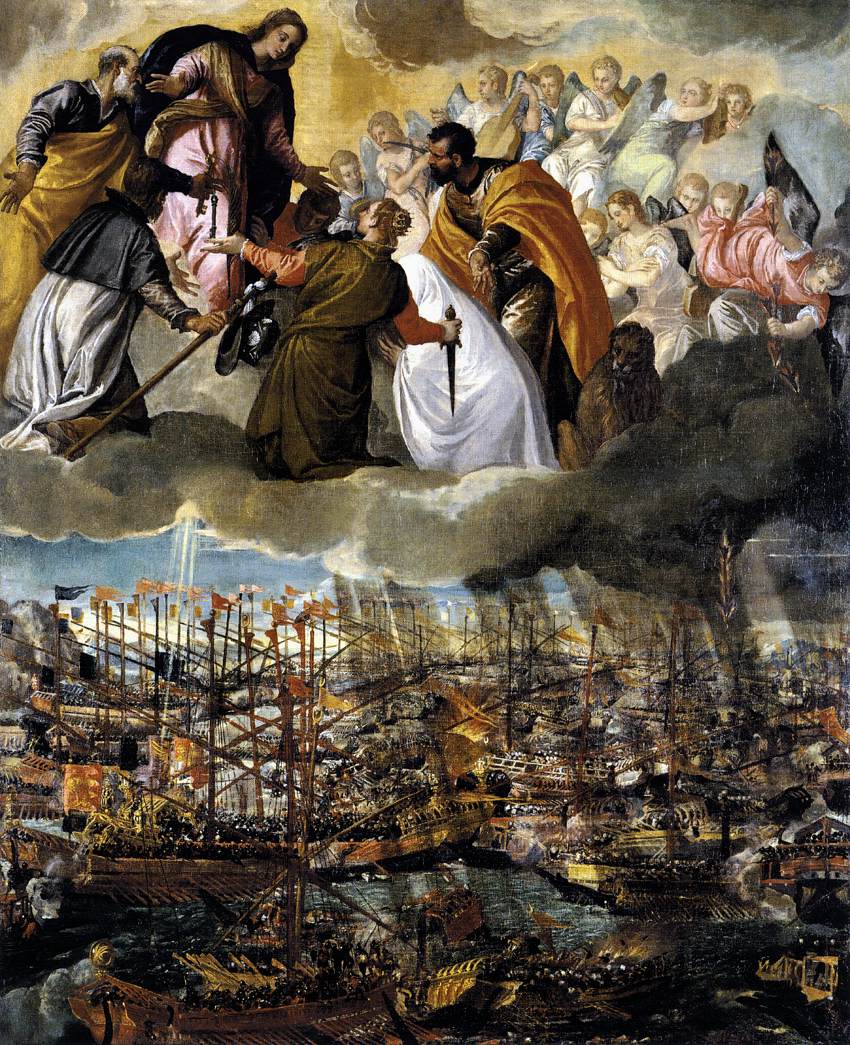
We can see the effectiveness of praying the Rosary in certain historical facts. In the 16th century, pope Pius V asked the Christians to pray the Rosary in asking heaven for the favour for a victory which is known as Lepanto, which led to the institution of the feast of the Rosary.

But its effectiveness can above all be verified in our own personal experience. In the Rosary, we discover a path that leads to God; what before seemed difficult now seems easier. What before was dark now becomes filled with light. This discovery is not achieved immediately. The Rosary cannot be understood if our interior dispositions are dominated by sin. To pray the Rosary well requires humility, simplicity. And as one goes along praying the Rosary, he contemplates… that child in Bethlehem, helpless, who needs care, and by comparison poverty is learn; or Jesus lost in the temple, who teaches us that the service of God comes before that of any creature. “In a word: we will contemplate, carried away by Love (the only real love is Love), each and every instant of Christ Jesus.”

This way of praying, if it becomes habitual, instills a supernatural instinct in the Christian. Each day his life becomes oriented more and more to God by the grace growing in his soul.

On the other hand, it is illustrative to recall that “those who think that devotions to our Lady are a thing of the past seem to have lost sight of the deep Christian meaning they contain. They seem to have forgotten the source from which they spring: faith in God the Father’s saving will; love for God the Son who really became man and was born of a woman; trust in God the Holy Spirit who sanctifies us with his grace. It is God who has given us Mary, and we have no right to reject her. We should go to her with a son’s love and joy.

Hence with this, the Rosary is not something monotonous. Rather it will be a living supplication and personal dialogue. And in it we find a deep channel for our devotion to Mary.

Amen.

Seeing that the Church militant in these our times is tossed this way and that...

http://www.heiligenlexikon.de/Fotos/Maria-Rosa-Lepanto.jpg

Who is She that comes forth as the morning rising, fair as the moon, bright as the sun, terrible as the army set in battle array?
She is the Queen of the Rosary, Our Lady of Victory
and may She aid Her Church in our battles today too, for we are living in times of war.


Pope Pius V's encyclical urging the praying of the Rosary during the wars that culminated in the Battle of Lepanto. It speaks very beautifully about finding recourse in the Rosary in times of trial :

Consueverunt Romani

Pope St. Pius V - 17 September 1569

The Roman Pontiffs, and the other Holy Fathers, our predecessors, when they were pressed in upon by temporal or spiritual wars, or troubled by other trials, in order that they might more easily escape from these, and having achieved tranquillity, might quietly and fervently be free to devote themselves to God, were wont to implore the divine assistance, through supplications or Litanies to call forth the support of the saints, and with David to lift up their eyes unto the Mountains, trusting with firm hope that thence would they receive aid.

1. Prompted by their example, and, as is piously believed, by the Holy Ghost, the inspired Blessed founder of the Order of Friars Preachers, (whose institutes and rule we ourselves expressly professed when we were in minor orders), in circumstances similar to those in which we now find ourselves, when parts of France and of Italy were unhappily troubled by the heresy of the Albegenses, which blinded so many of the worldly that they were raging most savagely against the priests of the Lord and the clergy, raised his eyes up unto heaven, unto that mountain of the Glorious Virgin Mary, loving Mother of God. For she by her seed has crushed the head of the twisted serpent, and has alone destroyed all heresies, and by the blessed fruit of her womb has saved a world condemned by the fall of our first parent. From her, without human hand, was that stone cut, which, struck by wood, poured forth the abundantly flowing waters of graces. And so Dominic looked to that simple way of praying and beseeching God, accessible to all and wholly pious, which is called the Rosary, or Psalter of the Blessed Virgin Mary, in which the same most Blessed Virgin is venerated by the angelic greeting repeated one hundred and fifty times, that is, according to the number of the Davidic Psalter, and by the Lord's Prayer with each decade. Interposed with these prayers are certain meditations showing forth the entire life of Our Lord Jesus Christ, thus completing the method of prayer devised by the by the Fathers of the Holy Roman Church. This same method St. Dominic propagated, and it was, spread by the Friars of Blessed Dominic, namely, of the aforementioned Order, and accepted by not a few of the people. Christ's faithful, inflamed by these prayers, began immediately to be changed into new men. The darkness of heresy began to be dispelled, and the light of the Catholic Faith to be revealed. Sodalities for this form of prayer began to be instituted in many places by the Friars of the same Order, legitimately deputed to this work by their Superiors, and confreres began to be enrolled together.

2. Following the example of our predecessors, seeing that the Church militant, which God has placed in our hands, in these our times is tossed this way and that by so many heresies, and is grievously troubled troubled and afflicted by so many wars, and by the deprave morals of men, we also raise our eyes, weeping but full of hope, unto that same mountain, whence every aid comes forth, and we encourage and admonish each member of Christ's faithful to do likewise in the Lord.

[Pius goes on to confirm the indults, indulgences, etc., which his predecessors had granted to those who pray the Rosary, and to explicitate several of these indulgences.]

Given at Rome at St. Peter's, under the Fisherman's ring, 17 September 1569, in the fourth year of our Pontificate.


Tuesday, October 7, 2008

Why pray the Rosary?

From EWTN

Why pray the Rosary today? Certainly, to grow in holiness and in one's prayer life. The following are a few others reasons why the rosary should be prayed often, even daily:

  • "Among all the devotions approved by the Church none has been so favored by so many miracles as the devotion of the Most Holy Rosary" (Pope Pius IX).

  • "Say the Rosary every day to obtain peace for the world" (Our Lady of Fátima).

  • "There is no surer means of calling down God's blessings upon the family . . . than the daily recitation of the Rosary" (Pope Pius XII).

  • "We do not hesitate to affirm again publicly that we put great confidence in the Holy Rosary for the healing of evils of our times" (Pope Pius XII).

  • "No one can live continually in sin and continue to say the Rosary: either they will give up sin or they will give up the Rosary" (Bishop Hugh Doyle).

  • "The Rosary is a magnificent and universal prayer for the needs of the Church, the nations and the entire world" (Pope John XXIII).

  • "The Rosary is the compendium of the entire Gospel" (Pope Paul VI quoting Pope Pius XII).

  • "Meditation on the mysteries of the Rosary . . . can be an excellent preparation for the celebration of those same mysteries in the liturgical actions [i.e. the Mass] and can also become a continuing echo thereof" (Pope Paul VI).

  • "My impression is that the Rosary is of the greatest value not only according to the words of Our Lady at Fátima, but according to the effects of the Rosary one sees throughout history. My impression is that Our Lady wanted to give ordinary people, who might not know how to pray, this simple method of getting closer to God" (Sister Lucia, one of the seers of Fátima).

  • "How beautiful is the family that recites the Rosary every evening" (Pope John Paul II).

  • Pope John Paul II has called the Rosary his "favorite prayer," after the Mass and the Liturgy of the Hours.

  • St. Louis de Montfort warns us against both the ignorant and scholars who regard the Rosary as something of little importance..."the Rosary is a priceless treasure inspired by God."